
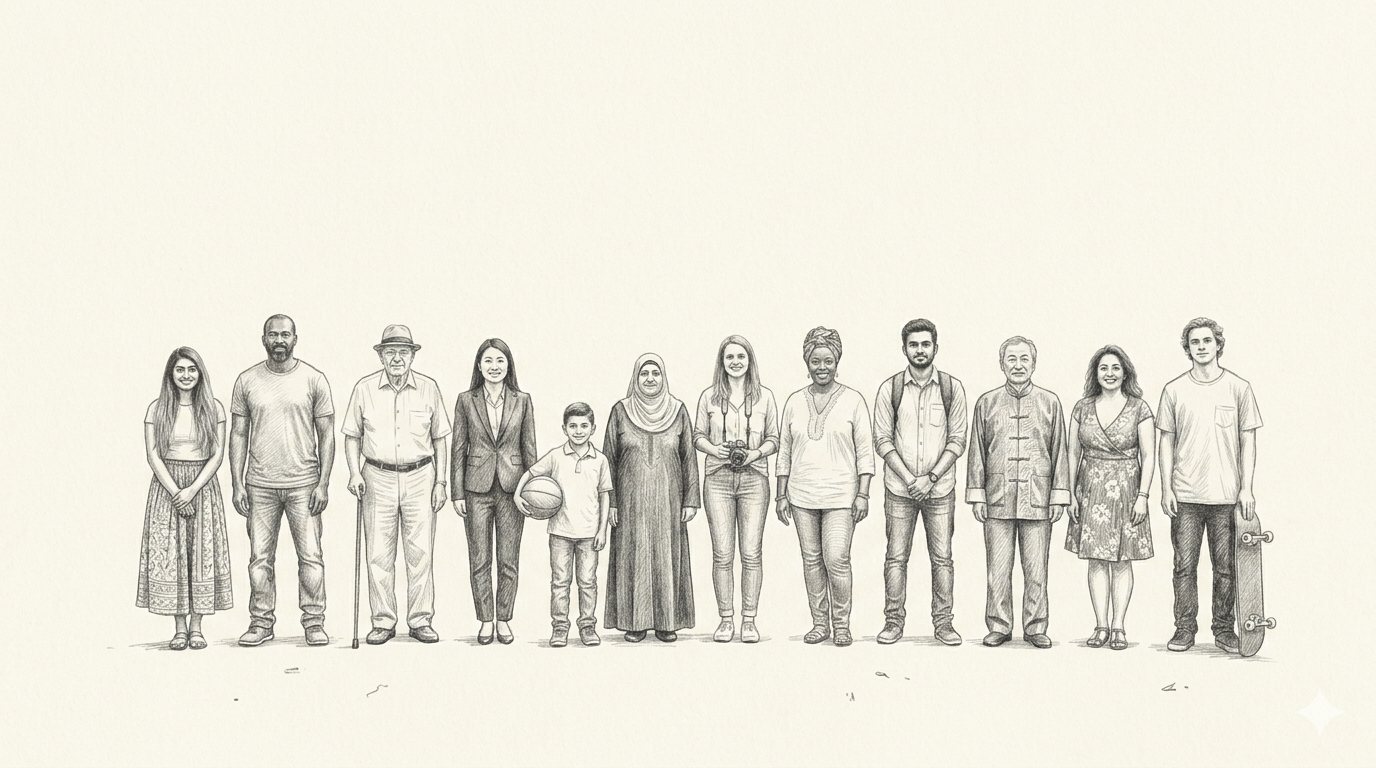
Bridging human differences with technology
Empowering humanity to reach agreements and move forward
For millennia, humans made agreements through trust, community, and shared wisdom. We're building the infrastructure to make that possible again for everyone.
The ancient art of agreement
Humans have always needed bridges
Long before courts and contracts, communities had their own architects of peace. The history of human civilization is, in part, the history of how we learned to resolve our differences.
Pre-history
Elders & Community Wisdom
Disputes settled by respected elders who knew both parties; contextual, personal, restorative. The community was the institution.
Agrarian era
Religious & Civic Leaders
Clergy, tribal chiefs, and civic figures held moral authority. Agreements sealed with shared values, witnessed by community.
Industrial era
Courts & Legal Systems
Formal institutions emerged to handle conflict at scale. Agreement became procedural, professional and expensive.
Today
A System in Crisis
Institutions built for a slower, smaller world face a flood of conflict. Trust has collapsed. Costs have soared. Most people are left out.
The dysfunction
Three failures demanding a new answer
The systems built to bridge differences are themselves becoming the barrier.
70%+
Trust collapse
Institutions have lost the public's faith
Trust in courts, governments, and legal systems sits at historic lows globally. When people don't believe in the referee, the game breaks down. According to the World Justice Project, about 5.1B people fail to recieve institutional support. The systems meant to bridge differences are now themselves a source of conflict.
Source: World Justice Project Rule of Law Index 2024
$375-$1,125
Economic exclusion
Per hour — the price of professional support
Lawyers, mediators, and arbitrators are priced beyond the reach of ordinary people and small businesses. Professional support for hard conversations has become a luxury. Those who need help most are least able to afford it.
Source: ADR Times survey of practicing arbitrators
65%
Startups fail due to disagreement
Approximately 65% of high-potential startups fail due to co-founder conflict and misalignment
Often referred to as "people problems", this statistic, highlighted in a research by Antwi-Situ & Koomson, suggests that underlying complexities, a lack of shared information, and eroding trust in the partnership, are the main cause of business failure.
Source: Antwi-Situ & Koomson, 2023
The opportunity
AI as the new infrastructure for agreement
“AI doesn't replace human judgment. It restores what was lost: accessible, contextual, dignified pathways to agreement.”
The word “joze” is an ancient Hebrew/Akkadian word חוזה that carries a dual meaning: the practical reality of a contract, and the forward-looking vision of a prophet. Joze is built on the belief that those two things were never meant to be separate.
We don't digitize the old model. We rebuild agreement-making from first principles: giving agency back to the people most affected by conflict, not the professionals who profit from it.
Speed & Accessibility
Resolution in days, not years. Priced for people, not corporations.
Self-empowerment
Tools that give agency back to the parties, not the intermediaries.
Trust by design
Transparent, human-guided processes with professional oversight.
Who we work with
Built for many, accessible to all
Whether you're resolving a conflict, aligning a founding team, or embedding Joze into your professional practice, there is a path for you.
- Affordable and allows full predictability around pricing and time.
- Typically saves more than 80% of time compared to alternatives.
- Built for privacy, discretion and availability.
- Engage at your convinience.
Direct users
People who need an agreement
Individuals & Families
Facing a conflict or a complex family situation? Joze guides you, step by step, toward an agreement everyone can live with.
Business Partners
Make a partnership more resilient. When circumstances change, Joze brings every stakeholder onto the same page before tensions harden.
Founding Teams
Align co-founders, or founders and investors, on the decisions that matter most, before small cracks become deal-breakers.
Communities
Coming soonResolving disputes and shared decisions at the neighborhood and civic level.
Professional & institutional
Practices that scale resolution
Mediators & Arbitrators
Save up to 90% of your time and your clients' time with a tight, effective, AI-powered workflow, without giving up control.
Law Firms & Legal Departments
Often it's a people problem, not a legal one. Joze is built precisely for those human conversations the law can't resolve alone.
Startup Accelerators & VCs
If keeping your portfolio moving forward is essential to your returns, Joze helps founders stay aligned and unblocked.
Institutions & Nonprofits
If your mission is to help people in crisis, Joze is a tool that extends your reach and deepens your impact.
“For the first time in history, we have the tools to make agreement-making accessible to all of humanity, not just those who can afford the system.”The Joze Proclemation